
 Hyundai Sonata: Anchor Pretensioner (APT). Repair procedures
Removal
| 1. |
Disconnect the battery negative cable, and wait for at least three
minutes before beginning work.
|
| 2. |
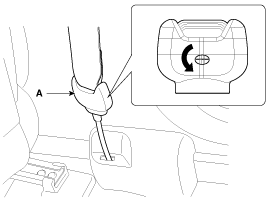
Using a flat-trip screwdriver, remove the seat belt anchor pretensioner
(A).
|
| 3. |
Remove the door scuff trim. (Refer to the Body group- Interior
trim)
|
| 4. |
Remove the center pillar trim. (Refer to the Body group- Interior
trim)
|
| 5. |
Disconnect the anchor pretensioner connector.
|
| 6. |
Loosen the anchor pretensioner mounting bolt and remove the anchor
pretensioner.
|
Installation
| 1. |
Remove ignition key from the vehicle.
|
| 2. |
Disconnect the negative (-) cable from battery and wait for at
least three minutes.
|
| 3. |
Install the anchor pretensioner with a bolt.
|
| 4. |
Connect the anchor pretensioner connector.
|
| 5. |
Install the center pillar trim. (Refer to the Body group- Interior
trim)
|
| 6. |
Install the door scuff trim. (Refer to the Body group- Interior
trim)
|
| 7. |
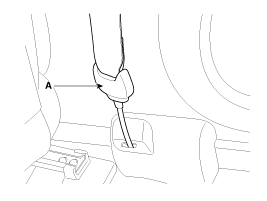
Insert the seat belt to the anchor pretensioner (A).
|

| 8. |
Reconnect the battery negative cable.
|
| 9. |
After installing the anchor pretensioner, confirm proper system
operation:
|