
 Hyundai Sonata: Rear Assist Arm. Repair procedures
Replacement
| 1. |
Remove the rear wheel & tire.
|

| 2. |
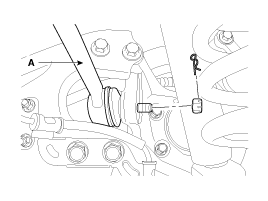
Remove the split pin and castle nut and then disconnect the rear
assist arm (A) from the rear axle.
|
| 3. |
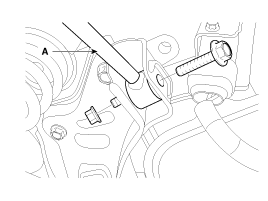
Loosen the bolt & nut and then remove the rear assist arm (A)
with the sub frame.
|
| 4. |
Installation is the reverse of removal.
|
| 5. |
Check the alignment.
(Refer to 'Tires/Wheels - alingment')
|
Inspection
| 1. |
Check the bushing for wear and deterioration.
|
| 2. |
Check for all bolts and nut.
|
 Rear Stabilizer Bar. Repair procedures
Replacement
1.
Remove the rear wheel & tire.
Tightening torque:
88.3 ~ 107.9 N.m (9.0 ~ 11.0 kgf.m, 65.1 ~ 79.6 lb-ft)
...
 Trailing Arm. Repair procedures
Replacement
1.
Remove the rear wheel & tire.
Tightening torque:
88.3 ~ 107.9 N.m (9.0 ~ 11.0 kgf.m, 65.1 ~ 79.6 lb-ft)
...
See also:
Rear Window Glass. Repair procedures
Removal
•
Put on gloves to protect your hands.
•
...
High Pressure Fuel Pump. Repair procedures
Removal
In case of removing the high pressure fuel pump, high pressure
fuel pipe, delivery pipe, and injector, there may be in ...
Rear Wheel Speed Sensor. Components and Components Location
Components
1. Rear wheel speed sensor cable
2. Rear wheel speed sensor
...
