
 Hyundai Sonata: Rear Assist Arm. Repair procedures
Replacement
| 1. |
Remove the rear wheel & tire.
|

| 2. |
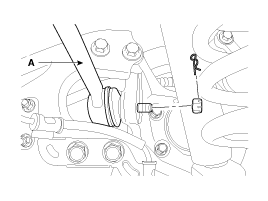
Remove the split pin and castle nut and then disconnect the rear
assist arm (A) from the rear axle.
|
| 3. |
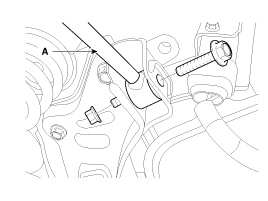
Loosen the bolt & nut and then remove the rear assist arm (A)
with the sub frame.
|
| 4. |
Installation is the reverse of removal.
|
| 5. |
Check the alignment.
(Refer to 'Tires/Wheels - alingment')
|
Inspection
| 1. |
Check the bushing for wear and deterioration.
|
| 2. |
Check for all bolts and nut.
|
 Rear Stabilizer Bar. Repair procedures
Replacement
1.
Remove the rear wheel & tire.
Tightening torque:
88.3 ~ 107.9 N.m (9.0 ~ 11.0 kgf.m, 65.1 ~ 79.6 lb-ft)
...
 Trailing Arm. Repair procedures
Replacement
1.
Remove the rear wheel & tire.
Tightening torque:
88.3 ~ 107.9 N.m (9.0 ~ 11.0 kgf.m, 65.1 ~ 79.6 lb-ft)
...
See also:
Brake Booster. Components and Components Location
Components (1)
1. Brake booster
2. Master cylinder assembly
3. O-ring
Components (2)
1. Vacuum pump
2. Bracket
...
Intake Manifold. Repair procedures
Removal and Installation
1.
Remove the engine cover.
2.
Disconnect the battery negative terminal (A).
Tightening tor ...
Manual climate control system
1. Turn the ignition switch to the ON position.
2. Turn the mode selection knob to the defrost position ().
3. Push the air intake control button at least 5 times within 3 seconds.
The indicator ...
