
 Hyundai Sonata: Repair procedures
On-vehicle Inspection
|

Check The Battery Terminals And Fuses
| 1. |
Check that the battery terminals are not loose or corroded.
|
| 2. |
Check the fuses for continuity.
|
Inspect Drive Belt
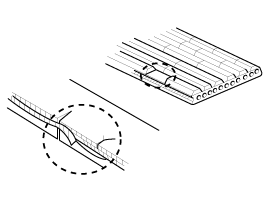
Visually check the belt for excessive wear, frayed cords etc.
If any defect has been found, replace the drive belt.
Cracks on the rib side of a belt are considered acceptable. If
the belt has chunks missing from the ribs, it should be replaced.
|

Visually Check Alternator Wiring And Listen For Abnormal Noises
| 1. |
Check that the wiring is in good condition.
|
| 2. |
Check that there is no abnormal noise from the alternator while
the engine is running.
|
Check Discharge Warning Light Circuit
| 1. |
Warm up the engine and then turn it off.
|
| 2. |
Turn off all accessories.
|
| 3. |
Turn the ignition switch "ON". Check that the discharge warning
light is lit.
|
| 4. |
Start the engine and Check that the light goes off.
If the light does not go off as specified, troubleshoot the discharge
light circuit.
|
 Description and Operation
Description
The charging system includes a battery, an alternator with a built-in
regulator, and the charging indicator light and wire.
The Alternator has built-in diodes, each rectifying A ...
 Alternator. Components and Components Location
Components
1. Pulley
2. Front bracket
3. Front bearing
4. Bearing cover
5. Bearing cover bolt
6. Rotor
7. Rear bearing
8. Rear bracket
9. Through b ...
See also:
Special Service Tools
Special Service Tools
Tool (Number and Name)
Illustration
Use
09568-34000
Crossmember support
Supporting of the cro ...
TPMS Receiver. Description and Operation
Operation
1.
General Function
A.
Auto-locate/learn takes place only once per Ignition cycle.
B.
O ...
Battery replacement
A smart key battery should last for several years, but if the smart key is not
working properly, try replacing the battery with a new one. If you are unsure how
to use your smart key or replace ...
