
 Hyundai Sonata: Rear Shock Absorber. Repair procedures
Replacement
| 1. |
Remove the rear wheel & tire.
|

| 2. |
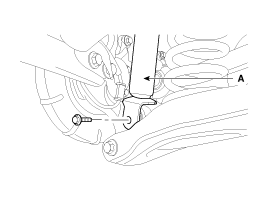
Loosen the bolt & nut and then disconnect the shock absorber (A)
with the rear axle.
|
| 3. |
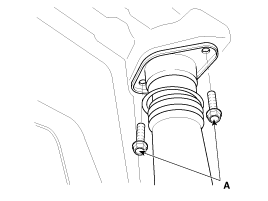
Loosen the shock absorber mounting bolts (A).
|
| 4. |
Installation is the reverse of removal.
|
| 1. |
Check the rubber parts for wear and deterioration.
|
| 2. |
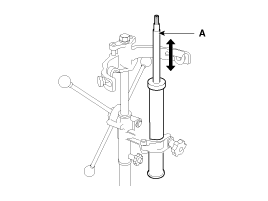
Compress and extend the piston rod (A) and check that there is
no abnormal resistance or unusual sound during operation.
|
 Rear Shock Absorber. Components and Components Location
Components
1. Self locking nut
2. Bracket assembly
3. Bumper rubber
4. Dust cover
5. Shock absorber
...
 Rear Upper Arm. Repair procedures
Removal
1.
Remove the rear wheel & tire.
Tightening torque:
88.3 ~ 107.9 N.m (9.0 ~ 11.0 kgf.m, 65.1 ~ 79.6 lb-ft)
...
See also:
Fuel Tank Pressure Sensor (FTPS). Description and Operation
Description
Fuel Tank Pressure Sensor (FTPS) is a component of the evaporative emission
control system and is installed on the fuel tank, the fuel pump, or the canister.
It checks the purge ...
Description and Operation
Description
The SMART KEY system is a system that allows the user to access and operate
a vehicle in a very convenient way. To access the vehicle, no traditional key
or remote control unit i ...
Air bag warning light
The purpose of air bag warning light in your instrument panel is to alert you
of a potential problem with your air bag - Supplemental Restraint System (SRS).
When the ignition switch is turned ON ...
